Which English classics are easiest to read for learners?
Most famous English classic novels are B2 reads on the CEFR scale: our team rates Alice’s Adventures in Wonderland, Dr Jekyll and Mr Hyde, The Great Gatsby and Pride and Prejudice B2 and The Picture of Dorian Gray B1, while Shakespeare’s Romeo and Juliet and the long translated Notre-Dame de Paris need C1 or more. Length is a poor guide to difficulty: Pride and Prejudice is two and a half times as long as The Great Gatsby but needs fewer word forms, so if you want easy books to read in English at B1, start with Alice or an adapted classic.
Books on this page
Free, with our level and reading time
Which English classic should you read first?
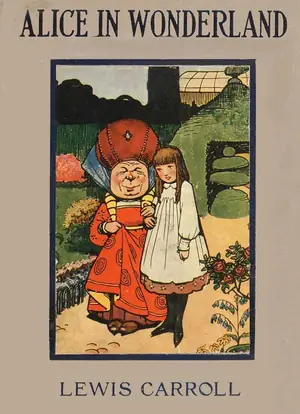
Start with the classic that is both short and light on vocabulary, which is Alice’s Adventures in Wonderland. After that, decide what limits you more: time or vocabulary. If time, take a short book with more different words, such as The Great Gatsby; if vocabulary, take a long book with fewer, such as Pride and Prejudice. The table lists the classic novels written in English that are in our table of free books by level, ordered by how many word forms you need to recognise 95% of the text.
| Novel | Author | Our level | Words | Different word forms | Forms for 95% | Forms for 98% | Reading time |
|---|---|---|---|---|---|---|---|
| Alice’s Adventures in Wonderland | Lewis Carroll | B2 | 26,775 | 2,634 | 1,399 | 2,099 | 2–4.5 h |
| Pride and Prejudice | Jane Austen | B2 | 122,164 | 6,407 | 2,425 | 3,964 | 10–20 h |
| The Strange Case of Dr. Jekyll and Mr. Hyde | Robert Louis Stevenson | B2 | 25,785 | 3,973 | 2,684 | 3,458 | 2–4.5 h |
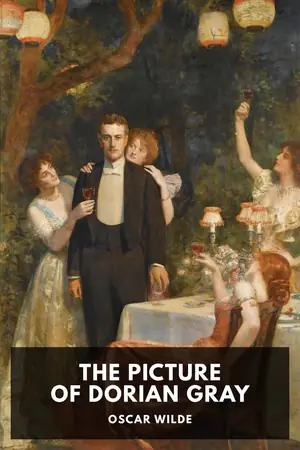
| The Picture of Dorian Gray | Oscar Wilde | B1 | 79,464 | 6,933 | 3,269 | 5,344 | 6.5–13 h |
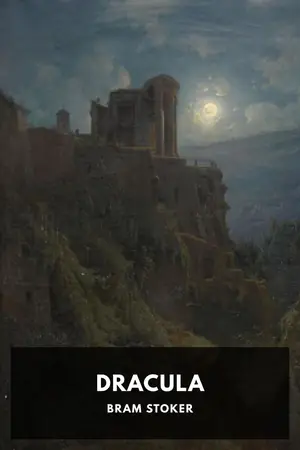
| Dracula | Bram Stoker | B2 | 161,387 | 9,437 | 3,383 | 6,210 | 13–27 h |
| The Great Gatsby | F. Scott Fitzgerald | B2 | 48,659 | 5,940 | 3,508 | 4,967 | 4–8 h |
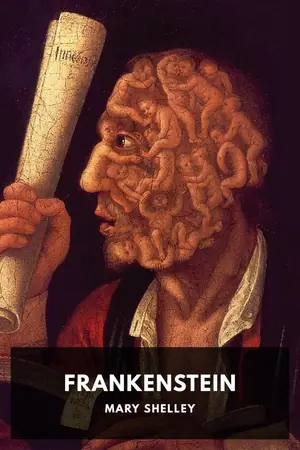
| Frankenstein | Mary Shelley | B2 | 78,010 | 7,282 | 3,747 | 5,722 | 6.5–13 h |
How to read the table. “Forms for 95%” is how many of a book’s most frequent word forms you need to recognise 95% of its running words; “forms for 98%” is the same for 98%, the share at which most readers manage a novel without a dictionary. A word form is any spelling in the text, so walk and walked count twice, and names count too. Reading time is the book’s words at 200 and at 100 words per minute, as on each book’s page. The level was set by hand by our team, judging each whole book, and the two measures do not always agree: The Picture of Dorian Gray is rated B1 but needs more word forms than Pride and Prejudice, rated B2. How the levels were set is under How were the levels set?
For a first classic, Alice is the clear start by vocabulary, and at 2 to 4.5 hours it is a book you can finish in a week of evenings. Its difficulty is elsewhere: much of the humour is wordplay, as when the Mouse says “Mine is a long and a sad tale!” and Alice thinks of its tail, and several of its poems are parodies of verses that Victorian children learned at school. If a joke escapes you, read on; the story does not depend on it. Every English book in our table, novels and stories, is on English books by level.
Is The Great Gatsby easy to read?
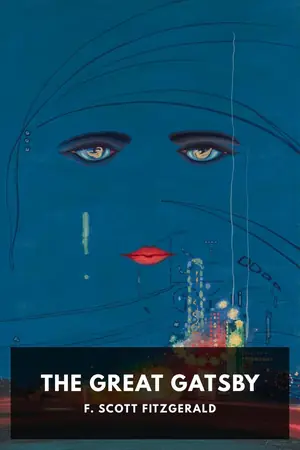
It is short, but it is not easy. The Great Gatsby has 48,659 words, about 4 to 8 hours of reading, and our team rates it B2. By vocabulary it is a typical B2 book: you need its 3,508 most frequent word forms to recognise 95% of the text, close to the median of 3,747 for the English B2 books in our table. That is more than Pride and Prejudice needs (2,425), although Austen’s novel is two and a half times as long.
The reason is how much Fitzgerald repeats his words: less than Austen. Gatsby uses 5,940 different word forms in under 50,000 words, almost as many as Pride and Prejudice uses (6,407) in over 120,000. Longer books always repeat more, so part of the gap is length, but the result for a learner is the same: in Gatsby, new words keep coming to the last page. Even the first sentence asks for more than its simple words: “In my younger and more vulnerable years my father gave me some advice that I’ve been turning over in my mind ever since.” “Turning over in my mind” is an idiom, not a literal turn.
At B2, read Gatsby in the original with a dictionary at hand: it is short enough to finish. At B1, try an adapted version first (see Original or adapted classic?), or read the original after one easier classic from the table above. The words worth learning before you start, such as lawn, porch, butler, glanced and stared, are listed on the book’s page, The Great Gatsby.
Is Pride and Prejudice too hard at B2?
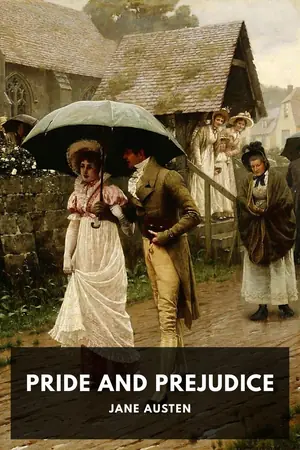
Not by its vocabulary. Our team rates Pride and Prejudice B2, and among the 19 English B2 books in our table it is the fourth easiest by vocabulary: you need 2,425 word forms to recognise 95% of the text, against a median of 3,747. What makes it hard at B2 is length and style, not rare words:
- Length. 122,164 words, about 10 to 20 hours at 200 to 100 words per minute. That is weeks of evenings, not days.
- Long sentences. Austen writes long, balanced sentences with several clauses, and much of the meaning sits in the grammar rather than in hard words.
- Irony. The famous first line, “It is a truth universally acknowledged, that a single man in possession of a good fortune, must be in want of a wife”, is meant ironically. You can understand every word and still miss the joke.
- Many characters early on. The novel follows five unmarried sisters, their parents and their neighbours, and most of them appear in the first chapters.
So at B2, the original is a reasonable choice if you have the patience for its length. If the first chapter passes the one-page test, keep going and let the story carry you through the long passages. If you are not yet at B2, a retelling is the better start: Oxford’s Bookworms Stage 6 version, retold by Clare West, has 29,455 words, about a quarter of the original, and Oxford itself labels it B2 and C1. Levels from publishers and our levels are not set the same way, so compare them only roughly.
Why are short classics like Jekyll and Hyde still hard?
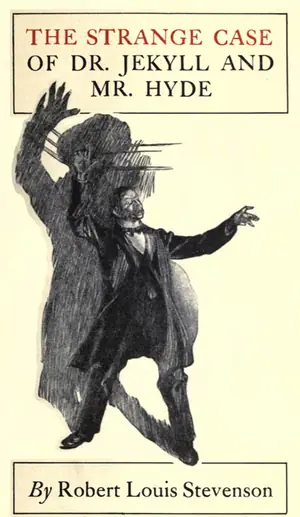
Because a short book can be dense. The Strange Case of Dr Jekyll and Mr Hyde has 25,785 words, about the same as Alice’s Adventures in Wonderland (26,775), and both take about 2 to 4.5 hours. But Stevenson uses 3,973 different word forms against Carroll’s 2,634, and you need 2,684 of them to recognise 95% of the text, against 1,399 for Alice. Our team rates both books B2.
Three things make Jekyll and Hyde harder than its length suggests:
- Formal Victorian vocabulary. The first sentence describes the lawyer Mr Utterson as “a man of a rugged countenance that was never lighted by a smile; cold, scanty and embarrassed in discourse; backward in sentiment”. Countenance, scanty and discourse are words modern textbooks rarely teach.
- A mystery told from outside. Most of the book follows Utterson as he tries to understand what is happening, and the explanation comes only in the last two chapters, “Dr. Lanyon’s Narrative” and “Henry Jekyll’s Full Statement of the Case”. If you miss a clue early, you may feel lost until the end.
- No easy stretches. In a long novel, easy chapters of dialogue give you a rest. A short, dense book gives you none, so the effort is the same on every page.
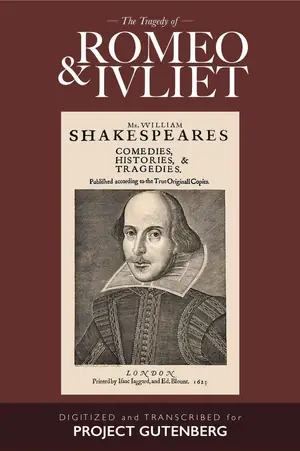
The same is true of Romeo and Juliet, a play rather than a novel: at 26,138 words it is as short as Jekyll and Hyde, and it needs fewer word forms for 95% of its text (2,443), yet our team rates it C2. Shakespeare’s verse and the English of his time are hard even where the words themselves are common. A short classic is a good choice because you can finish it, not because it is easy. Read Alice first, then Jekyll and Hyde.
Which English classics need C1 or above?
Of the English novels and plays in our table, only two sit above B2. Victor Hugo’s Notre-Dame de Paris, in Isabel F. Hapgood’s English translation, is rated C1: it has 185,410 words, about 15 to 31 hours of reading, and needs 6,219 word forms for 95% of the text, more than the median English C1 book in our table (4,633). Shakespeare’s Romeo and Juliet is rated C2. Every novel in our table that was written in English is rated B1 or B2. Non-fiction classics such as The Prince and The Wealth of Nations are rated C1 too.
That does not make the B2 novels easy at B1. At B1, read them after an adaptation of the same book or with a dictionary at hand, and keep the C1 books for later. All the B2 books, novels and stories, in all five languages, are on Books at B2.
Which English classics are free?
Every novel in the table above is free to read and download. Each title opens its page on this site, with a link to the free edition from Standard Ebooks or Project Gutenberg. Standard Ebooks says its editions of Alice’s Adventures in Wonderland, Dr Jekyll and Mr Hyde, Pride and Prejudice and The Great Gatsby are “thought to be free of copyright restrictions in the United States”, and asks readers elsewhere to check their local laws.
The Great Gatsby is the newest of them. It was published in 1925 and entered the US public domain on 1 January 2021, after the 95-year term for works of that year ran out. In the UK, copyright in a book lasts until 70 years after the end of the year its author died; Fitzgerald died in 1940, so Gatsby has long been out of copyright there too. The other authors in the table died earlier.
Two short modern classics that often appear on lists of easy books for learners are not free everywhere, and they are not in our table, so we have not rated them:
- Animal Farm, George Orwell (1945). Out of copyright in the UK since January 2021: Orwell died on 21 January 1950, and UK copyright ran to the end of 2020. In the United States it stays in copyright until 1 January 2041.
- The Old Man and the Sea, Ernest Hemingway (1952). In copyright in the United States until 2048: works published from 1931 to 1963 with a renewed copyright are protected for 95 years after publication. Hemingway died in 1961, so under the UK’s 70-year rule the book stays in copyright there until the end of 2031.
If you are in a country where one of them is still in copyright, a copy that claims to be free is likely to be unauthorised. Buy or borrow it, or test a page in a library copy first.
Original or adapted classic?
Read the original if one page from the middle passes the one-page test below; read an adaptation if it does not. An adapted classic, such as the Oxford Bookworms or Penguin Readers retellings, keeps the plot and main characters but rewrites every sentence in a limited vocabulary, so you lose the author’s style and most of the text: the Oxford Bookworms Stage 6 Pride and Prejudice has 29,455 words, about a quarter of Austen’s 122,164. In return you get a book you can read at your level without stopping. How much of the original each series keeps is on How much of the original book do adapted classics keep?, and how Oxford, Penguin, Cambridge and Macmillan levels line up with CEFR is on How do graded reader levels compare with CEFR?
Between the two sit Paul Nation’s free Mid-frequency Readers, which keep far more of the original than a graded reader and are written for readers who know 4,000, 6,000 or 8,000 word families. They are listed on Where to find free graded readers. A good order for many learners is an adaptation first and the original later, once you know the story. For shorter originals to read before a whole novel, see Free short stories in English.
How do I check a classic before I start?
Open the free edition in the middle, read one full page and count the words you could not translate. Names don’t count. On a page of about 250 words, five unknown words means you know about 98% of the words, the share that Hu and Nation’s study of reading fiction pointed to. If you stop more often than that, pick a book from higher in the table above or an adaptation. The full test is on Is this book right for my level?, and the same question for French books is on Which French classics are easiest to read?
Sources
- Reading Companion (2026). Free books by CEFR level: book pages with levels, words, different word forms and the word forms needed for 95% and 98% of the text, and the CSV file, CC BY 4.0, checked 24 November 2026. readingcompanion.org/data/books-by-level.csv
- Standard Ebooks. Alice’s Adventures in Wonderland, The Strange Case of Dr. Jekyll and Mr. Hyde, Pride and Prejudice and The Great Gatsby: copyright notes on each book’s page, checked 24 November 2026. Alice, Jekyll and Hyde, Pride and Prejudice, The Great Gatsby
- Oxford University Press Spain. Pride and Prejudice, Oxford Bookworms Library Stage 6, retold by Clare West: CEFR B2 and C1, 29,455 words, checked 24 November 2026. oup.es
- Jenkins, J. (2021). Public Domain Day 2021. Center for the Study of the Public Domain, Duke University School of Law: The Great Gatsby among the works of 1925 entering the US public domain after 95 years, checked 24 November 2026. cspd.law.duke.edu
- Copyright, Designs and Patents Act 1988, section 12(2): “Copyright expires at the end of the period of 70 years from the end of the calendar year in which the author dies”, checked 24 November 2026. legislation.gov.uk
- Wikisource. Author: Francis Scott Key Fitzgerald (1896–1940), checked 24 November 2026. en.wikisource.org
- Standard Ebooks. Animal Farm by George Orwell: “This book was published in 1945, and will therefore enter the U.S. public domain … on January 1, 2041”, checked 24 November 2026. standardebooks.org
- Harper, L. and Peel, C. (2021). Copyright, Public Domain and George Orwell. Irwin Mitchell, 21 January 2021: Orwell died on 21 January 1950; his works published before 1950 entered the UK public domain in January 2021, checked 24 November 2026. irwinmitchell.com
- Wikisource. Author: Ernest Hemingway (1899–1961): The Old Man and the Sea (1952), “Copyrighted in the United States until 2048”, checked 24 November 2026. en.wikisource.org
- Hirtle, P. B. (2026). Copyright Term and the Public Domain in the United States, updated 1 January 2026, Cornell University Library: works published 1931–1963 with notice and renewal, “95 years after publication date”, checked 24 November 2026. guides.library.cornell.edu
- Lists that recommend these books to learners: EnglishCentral, B2 level English books (both), and Preply, Learn English through story (The Old Man and the Sea, intermediate), checked 24 November 2026. englishcentral.com, preply.com
- Nation, I. S. P. and Anthony, L. (2013). Mid-frequency readers. Journal of Extensive Reading, 1, 5–16: Project Gutenberg texts adapted at three levels, for vocabularies of 4,000, 6,000 and 8,000 word families, checked 24 November 2026. eprints.lancs.ac.uk
- Hu, M. and Nation, P. (2000). Unknown vocabulary density and reading comprehension. Reading in a Foreign Language, 13(1), 403–430. doi.org/10.64152/10125/66973